Suches sits in a fold of the Chattahoochee National Forest where mountains eat cell signals and broadband infrastructure is measured in years, not months. For most guests, this is exactly the point. For some, it catches them off guard. Either way, knowing what to expect before you lose signal is worth a few minutes.
Cell Service
No carrier performs reliably in Suches. Signal bars in the valley are not a reliable indicator of anything. A bar or two may appear on ridge lines above the valley floor, but inside the valley itself, expect nothing consistent regardless of your carrier.
Driving toward Blue Ridge or Dahlonega, signal typically returns within 10 to 15 minutes. On ridge lines above the valley floor, a bar or two sometimes appears. Inside the valley itself, expect nothing reliable. If you need to make a call or check in with someone, a short drive in either direction is the practical solution.
Your North Georgia mountain escape is waiting. WiFi, landlines, a river, and zero reasons to stay home.
911 calls typically go through even with minimal cell signal. Beyond that, most modern smartphones support Emergency SOS via satellite, which bypasses cell towers entirely. iPhone 14 and later and select Android devices have this capability. Worth knowing where this feature lives on your device before you need it rather than after.
Dog Trackers
Cell-based dog trackers, including most popular consumer brands like Tractive and Whistle, will not work reliably in Suches. The cell signal simply is not there. Satellite-based trackers work in this terrain. SportDog made a well-regarded satellite tracking system, the TEK 2.0, with free satellite service included, but the product line has been discontinued. Garmin Alpha and similar hunting dog units are the current go-to for satellite tracking in this kind of backcountry. Our dog safety guide covers this alongside other things worth knowing before you arrive with a dog.
Internet: The Infrastructure Reality
This is where it gets interesting.
Suches is a small mountain community enclosed on all sides by the Chattahoochee National Forest. It straddles Fannin and Union counties, and the infrastructure on each side of the mountain reflects that divide. Two cabins in the same zip code can have entirely different internet providers, different underlying technology, and no ability to choose otherwise.
In rural mountain Georgia, there is no ISP competition. Whoever laid line in your area is who you have. When their technology changes, yours does too, whether you asked for it or not. Some properties in Suches still receive internet and phone service over old copper telephone lines, which predate the modern internet era but remain some of the most reliable infrastructure in the area. Others have been migrated by carriers to VOIP service as networks are modernized.
The difference matters practically. A copper phone line draws power from the telephone company's infrastructure, not your house. It works during a power outage. A VOIP phone needs your router running to function. In a mountain community where power outages happen, that is not a small distinction.
Getting new service extended to a rural mountain address is not a fast process. In some cases, residents and hosts have waited months or longer just to get basic broadband service to a property. That is not an anomaly. That is the timeline for rural internet in this part of North Georgia.
Featured HostHow this plays out at Toccoa Currents.
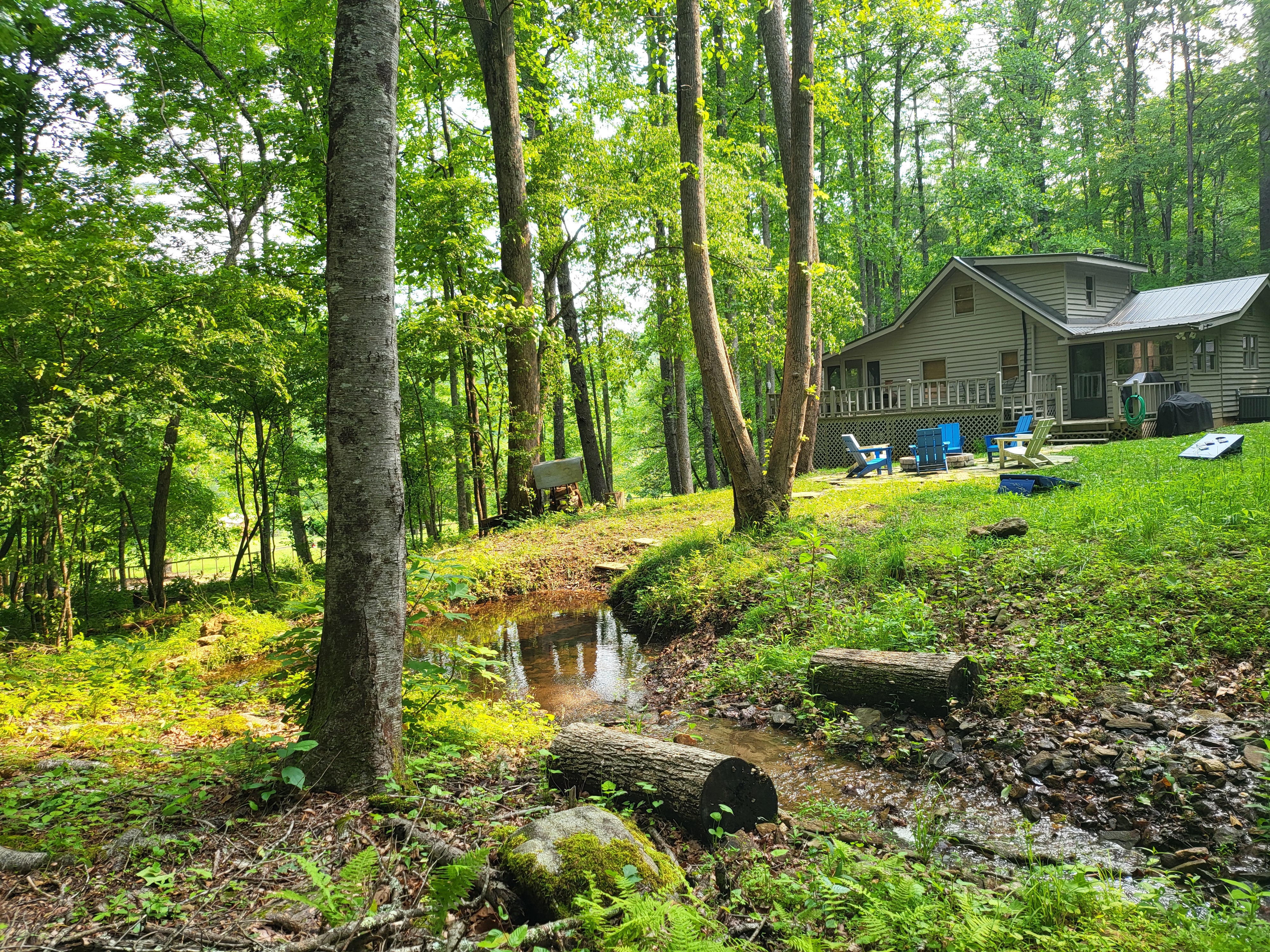
The two cabins sit on opposite sides of the same mountain in different counties. Same town, different ISPs, different underlying technology, no ability to choose otherwise. That is rural mountain infrastructure. Here is what each cabin actually has.
Headwaters (Union County): VOIP phone and internet. Our ISP updated the network and the landline came along for the ride. The phone needs the router to function, so we keep internet equipment on a UPS to bridge short outages.
Fish Head Lodge (Fannin County): Old copper infrastructure, the kind that predates the modern internet and draws power from the phone company rather than the house. The phone works through power outages on its own. We also have Starlink on the property. The trees have opinions about where the dish should point, and we are evaluating moving it to Headwaters where the sight lines are clearer.
Starlink
The only real alternative to whatever the local ISP offers is Starlink, SpaceX's satellite internet service. It delivers broadband to anywhere with a clear view of the sky. The catch in mountain terrain is trees and topography.
Starlink requires an unobstructed view of the northern sky. Dense tree cover and ridge lines can partially or fully block the signal. In a place like Suches, where the canopy is thick and the terrain is folded, placement of the dish matters as much as having the hardware. Waitlists for the service in rural areas have historically stretched months to over a year.
Where Starlink works, it works well. Where the trees win, it does not. Rural broadband is usually a work in progress, and Suches is no exception.
Before You Arrive
A few things worth sorting before you leave cell range:
Offline maps. Google Maps, AllTrails, and Gaia GPS all support offline map downloads. Downloading the Suches, Blue Ridge, and Ellijay area before arrival means navigation works without signal.
Entertainment downloaded. Streaming is not reliable without consistent internet or cell signal. Whatever you want to watch or listen to is worth downloading ahead of time.
Key contacts saved locally. Host numbers, emergency contacts, and vet numbers if you are bringing a dog. Saved on the device, not relying on a cloud lookup.
People who need to reach you should know you will be largely unreachable for the duration. Not a warning. Just a courtesy.
Frequently Asked Questions
Does Suches GA have cell service?
No carrier performs reliably in Suches. Signal bars in the valley are not a reliable indicator of anything. Signal typically returns when driving toward Blue Ridge or Dahlonega.
Can I use 911 in Suches without cell service?
Emergency calls typically go through even with minimal signal. Most modern smartphones also support Emergency SOS via satellite, which bypasses cell towers entirely.
Does Starlink work in Suches GA?
Starlink can work in Suches with an unobstructed view of the sky. Dense tree cover is the main obstacle. The service delivers broadband speeds where the dish has a clear line of sight.
Can I work remotely from a cabin in Suches GA?
Yes. Both Toccoa Currents cabins have dedicated workspaces with monitors and WiFi that handles video calls and data work. Cell signal for a mobile hotspot is not a viable backup in Suches, but the cabin WiFi is a separate infrastructure. It works.
🏕️ Headwaters
🐟 Fish Head Lodge
Featured HostStaying at Toccoa Currents? Here is how we handle connectivity.
Fannin County's STVR ordinance requires cell or internet. Where neither exists, a dedicated emergency phone must be provided. Cell service at both cabins is limited to nonexistent. We provide internet. Both cabins have WiFi and guests who expected to be unreachable have used WiFi calling on their own phones through the cabin internet and never missed a call.
We go above that. We pay extra to have landlines at both cabins. That is not a requirement. It is a choice. The landlines have come in handy more than once. We will leave it at that.
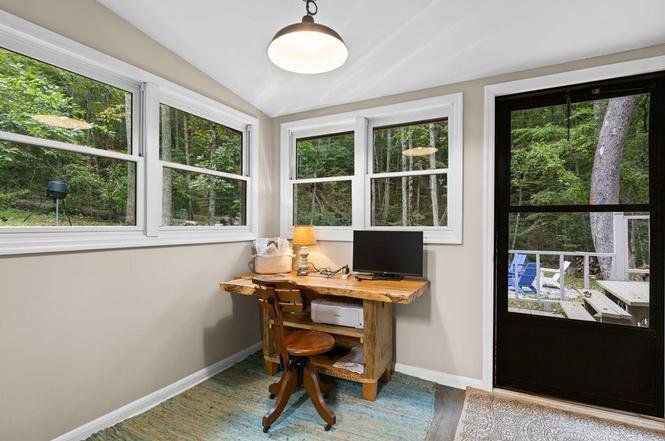
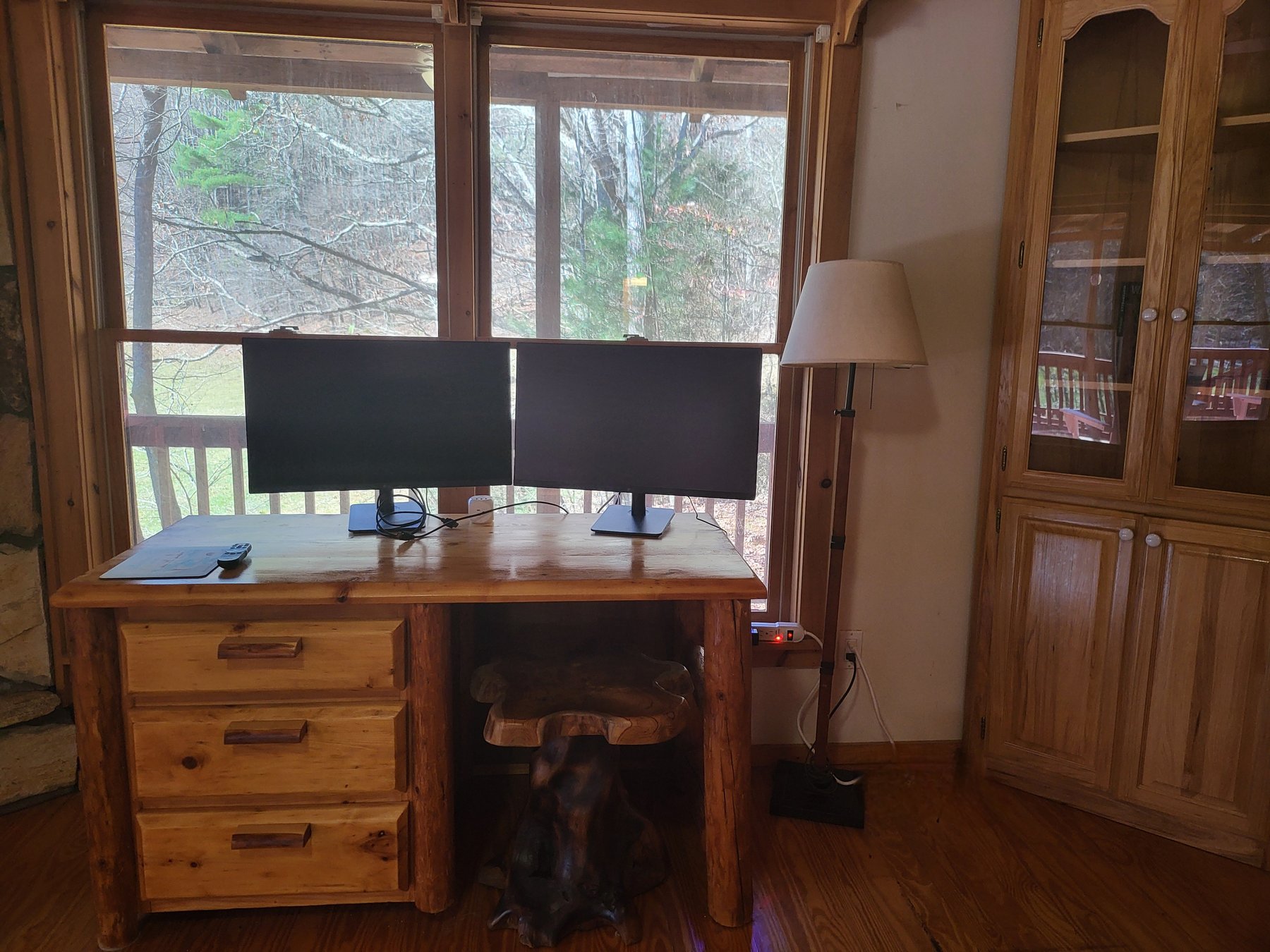
The internet also pulls its weight beyond calls. We have worked from both cabins ourselves. Data work, video calls, no issues. Headwaters has two 27-inch monitors and a dedicated workspace in the living room next to the gas fireplace, looking toward the neighboring pastures and mountains. Fish Head has a monitor and a dedicated workspace overlooking the open deck, the firepit, and the trees.