Two different people arrive at a mountain cabin with a laptop. One is on vacation and brought work along. The other works remotely and brought the mountains along. This page is for both.
There is no commute. The hour you would have spent in traffic is just morning. North Georgia has the terrain, the altitude, the quiet, and the WiFi. Here is what to expect.
What You Actually Need
Working remotely from a mountain cabin requires less than most people assume. The list is short:
Internet. Confirm with your host before booking that internet is available. Cell signal is not a viable backup in Suches. The full infrastructure picture is in our cell service and internet guide.
A quiet place to work. This one solves itself. No pop-ins, no impromptu lunch invitations, no ambient noise from the person two desks over on a loud call. No one books the conference room you needed. Less noise in equals better signal out. The main competition for your attention is outside.
Cell signal. It disappears once you are in the valley. Making and taking calls on your phone requires either WiFi calling through the cabin internet or a drive toward Blue Ridge or Dahlonega. Let people know before you lose signal on the way in.
People who know your schedule. Your team needs to know when you are available and when you are not. Block your calendar before you arrive. The daylight hours matter more than you might expect.
Your mountain office is waiting. No commute. No cubicle. No one taking the conference room.
Cell service and cabin WiFi are two different things. Cell service in Suches is limited to nonexistent. The cabin WiFi is a separate infrastructure entirely, and it works. Video calls, data work, normal remote workdays. The full picture on how the infrastructure differs across the mountain is in our cell service and internet guide.
Before you leave signal range: Download what you need. Set your status with your team. Let people know you are in a no-cell zone for the duration. Everything else can wait.
Plan Around Daylight
Hwy 60 runs through the Suches valley. It is one lane each way. In daylight it is scenic. After dark it requires more attention than the road sign suggests. Driving into Blue Ridge or Dahlonega is best done before the sun goes down.
Businesses in the surrounding towns keep mountain hours that can be hard to verify online. Posted hours may not reflect current reality. Calling a few days ahead to confirm is worth the effort before you make the drive.
The practical workcation schedule that accounts for this: work the early morning and late afternoon, use the middle of the day for town. Block your calendar, tell your team, and treat the daylight hours as the resource they are. The mountain rewards the people who plan around it rather than against it.
Our getting around guide covers the roads, rideshare reality, hiker shuttles, and wine tours in more detail.
If You Work Remotely Full Time
If you are not on a workcation but simply work remotely and are choosing where to do it, the mountain is not a compromise. It is an upgrade. Same calls, same files, same deliverables. Different view out the window, no commute, and a trail at the end of the day instead of a parking garage.
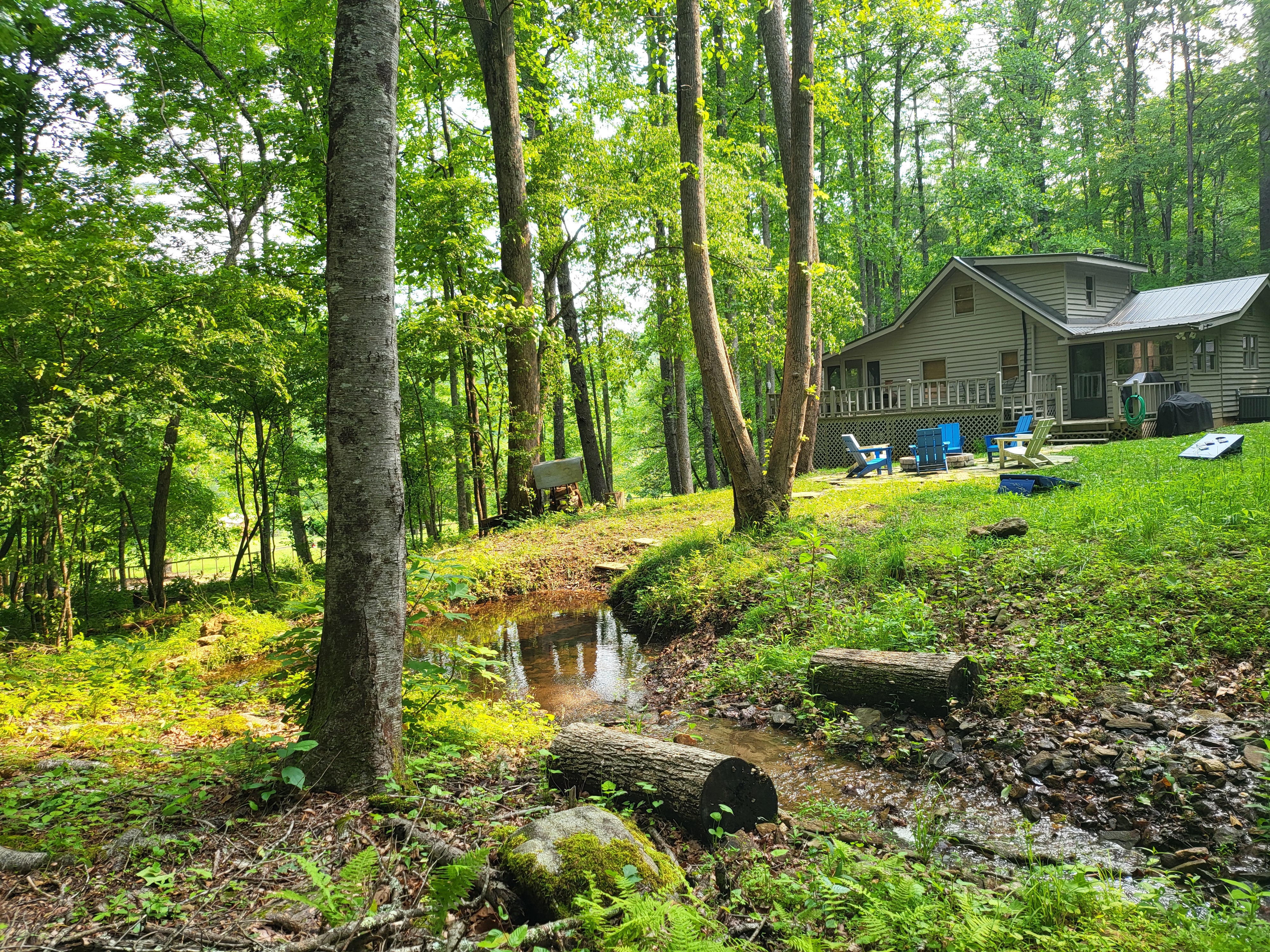
Full-time remote workers already have the routine. The mountain fits into it. The river outside the window is a daily perk, not a distraction. The challenge is the same one remote workers face everywhere: building structure into the day. The quiet here makes that easier, not harder.
The lunch break is different here. Go kayak. Take a hike. Be back at your desk in an hour. That is not a workcation compromise. That is just what Tuesday looks like.
The Workcation Problem
The workcation is a different story.
You will block the morning for deep work. You will do good work. Then you will look up. The river is right there. The trail starts at the edge of the property. The temperature is seventy degrees and the leaves are moving. The argument for closing the laptop at noon becomes very strong, very fast.
A workcation is not the same as a remote work arrangement. The mountain does not care about your sprint deadline. Plan your day knowing you are going to want to stop working earlier than you planned, because you will have a better reason to stop than you usually do.
Bringing the Dog
One of the better arguments for a mountain workcation over a coffee shop or co-working space is the dog. No commute means the dog comes with you. Working remotely from a cabin means the dog sleeps under the desk while you work. The trails are right there for a proper midday break instead of a short walk around the block.
Can you work remotely from a cabin in North Georgia?
Many cabins in the area have WiFi, but not all. Confirm with your host before booking that internet is available. Cell service in Suches is limited to nonexistent, so a mobile hotspot is not a viable backup. Do not assume.
Is a mountain cabin good for a workcation?
For the right kind of work, genuinely yes. Deep focus work, writing, planning, and solo projects tend to go well. Anything requiring constant availability or fast file transfers is harder. The absence of a commute, an open office, and a social calendar clears a surprising amount of mental space. The main risk is wanting to stop working at noon because it is too nice outside.
What is the cell service like in Suches, GA?
Limited to nonexistent in the valley. Signal typically returns within 10 to 15 minutes driving toward Blue Ridge or Dahlonega. Plan your communication accordingly, and let your team know before you lose signal.
🏕️ Headwaters
🐟 Fish Head Lodge
Featured HostWe have worked remotely from both Headwaters and Fish Head Lodge. Multiple times. Data work. Video calls. No issues.
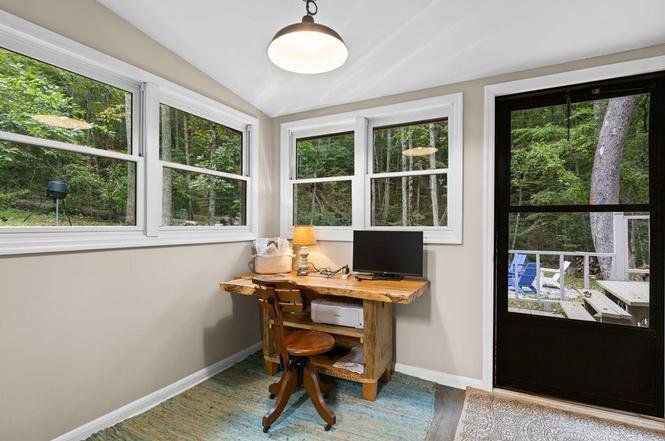
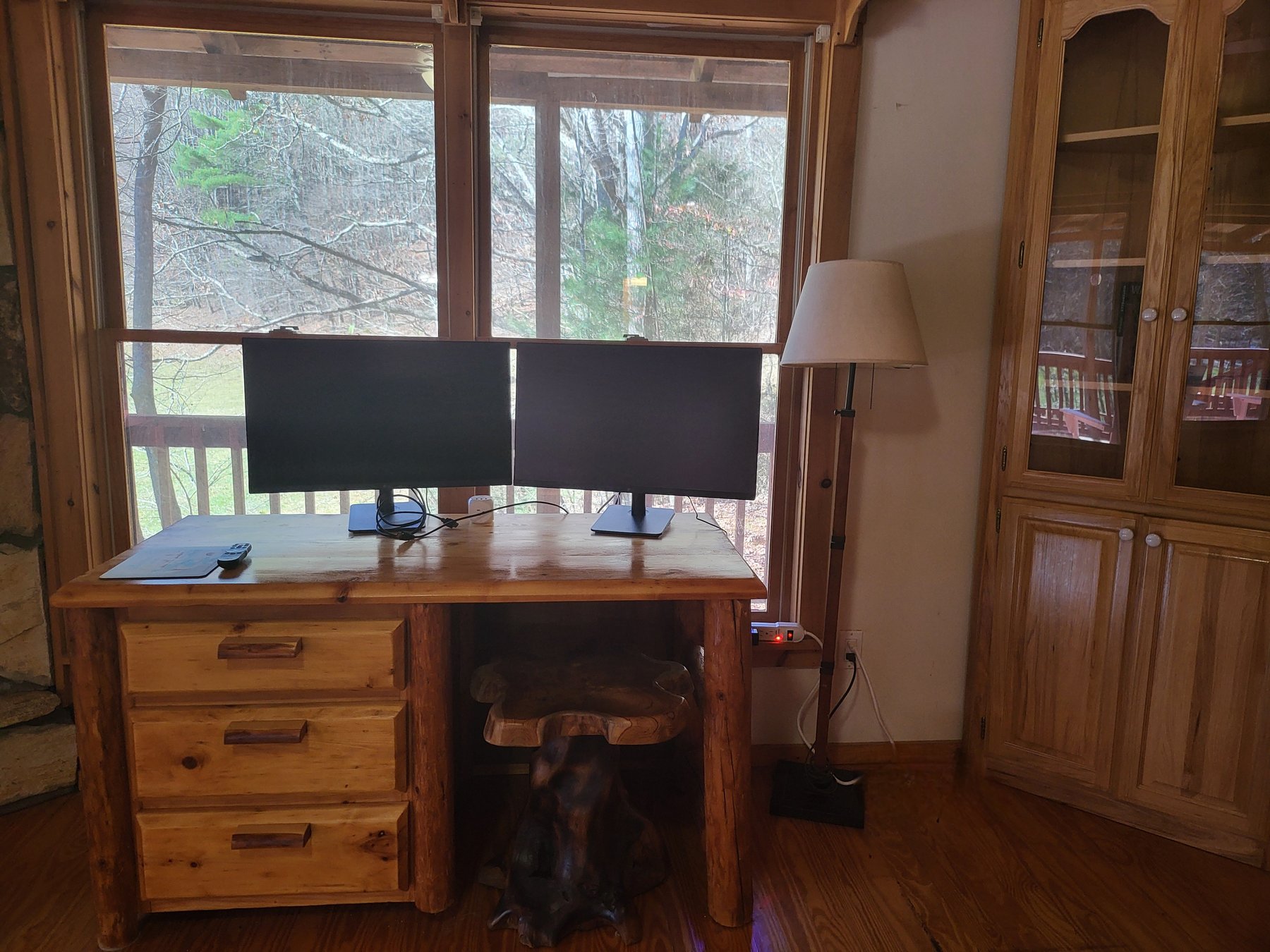
Headwaters has two 27-inch monitors and a dedicated workspace in the living room next to the gas fireplace, looking out toward the neighboring pastures and mountains. Fish Head has a monitor and a dedicated workspace overlooking the open deck, the firepit, and the trees.
Guests have mentioned in reviews that there was no cell service. That is accurate. What they also mentioned was that they used WiFi calling on their phones through the cabin internet and never missed a call. The cell signal situation is real. Being unreachable is not.
The internet at each property runs on different infrastructure because they sit on opposite sides of the same mountain in different counties. For the full picture on connectivity, see our cell service and internet guide. The hardest part of working from either cabin is not the internet. It is the view.